Accessing your attic should never feel like a risk. Yet thousands of home accidents each year are linked to improper or poorly maintained access equipment. Whether you’re retrieving seasonal storage or completing an inspection, choosing the right loft ladder is one of the most important safety decisions you can make for your home. This guide walks you through the key factors to consider, backed by practical insight and useful data.
What Types of Loft Ladders Are Available?
There are four primary types to consider:
Sliding ladders – Extend downward in sections; ideal for higher ceilings (up to 3.5 meters or more)
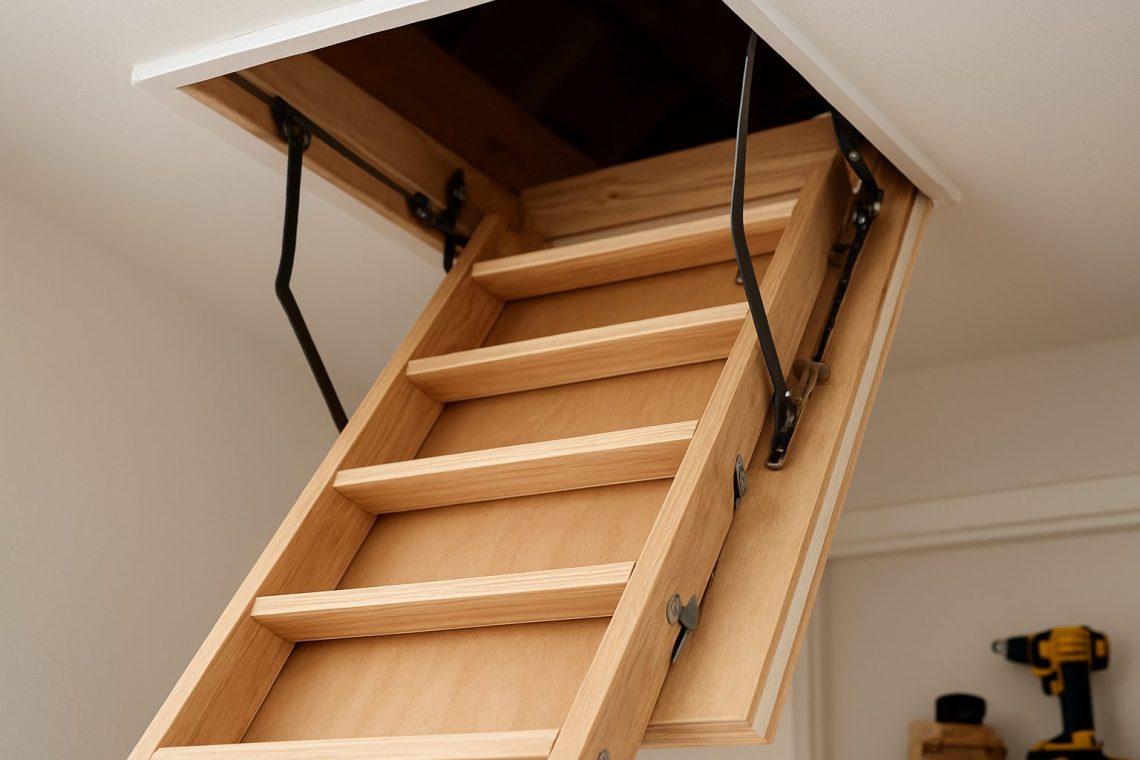
Folding ladders – Concertina or tri-fold designs that fold neatly into the hatch; suited for standard ceiling heights
Telescoping ladders – Compact and adjustable; popular in smaller homes with limited storage overhead
Fixed ladders – Permanently mounted; best for frequent, heavy-use attic access
Each type offers different load capacities, installation requirements, and space footprints. Your ceiling height and hatch size are the first measurements to confirm before shortlisting any model.
How Much Weight Should a Loft Ladder Support?
Structural load capacity is non-negotiable. Most residential loft ladders are rated to support between 150 kg and 200 kg. However, if you regularly carry heavy boxes or equipment into your attic, a higher-rated model is worth the investment.
According to the UK Health and Safety Executive, falls from height remain one of the leading causes of serious injury in domestic settings. Overloading a ladder that isn’t rated for the task is one of the most preventable contributing factors.
Always verify the EN 14975 certification for loft ladders sold in Europe and the UK—this standard sets minimum requirements for strength, stability, and step dimensions.
What Materials Offer the Best Balance of Strength and Weight?
The three most common materials are:
Timber – Traditional appearance, sturdy, and thermally insulating; slightly heavier
Aluminium – Lightweight, corrosion-resistant, and low maintenance; excellent for frequent use
Steel – Maximum strength; typically found in commercial or heavy-duty applications
For most homeowners, aluminium strikes the best practical balance. It’s easy to deploy, durable in varying temperatures, and widely available across different price points.
Does Step Width and Depth Actually Matter for Safety?
Yes—significantly. Wider, deeper steps reduce foot fatigue and the likelihood of slipping, particularly when descending while carrying items. A step depth of at least 60 mm is considered the practical minimum for comfortable use.
Research from ergonomics studies consistently shows that ladder-related injuries spike when users attempt to carry objects while descending narrow-step ladders. If your attic doubles as functional storage rather than a rarely visited space, step dimensions should be a primary filter in your selection process.
How Do You Ensure Correct Installation?
Poor installation is responsible for a significant proportion of loft ladder failures. Key steps include:
Confirm the hatch size – Standard UK hatch openings are typically 562 mm x 726 mm, but custom sizes are common in older homes
Check the ceiling height range – Each ladder model specifies the min/max ceiling height it accommodates
Use appropriate fixings – Timber joists require different anchor points than metal framework
Test the deployment mechanism – Springs and hinges should operate smoothly without resistance or catching
If you’re uncertain about the structural integrity of your hatch frame, consult a qualified tradesperson before installation. A poorly supported hatch can compromise even the most robust ladder.
What Energy Efficiency Features Should You Look For?
Modern loft ladders increasingly incorporate insulation panels within the hatch door. Given that up to 25% of domestic heat loss can occur through the roof space (according to the Energy Saving Trust), a thermally insulated hatch cover can have a measurable impact on your energy bills over time.
Look for a U-value rating of 0.6 W/m²K or lower for meaningful thermal performance.
Making the Right Choice
Selecting a loft ladder isn’t a decision to rush. Matching the right type, material, load rating, and installation method to your specific home ensures you get safe, long-lasting performance. Prioritise certified products, measure carefully, and don’t compromise on step quality or structural support.