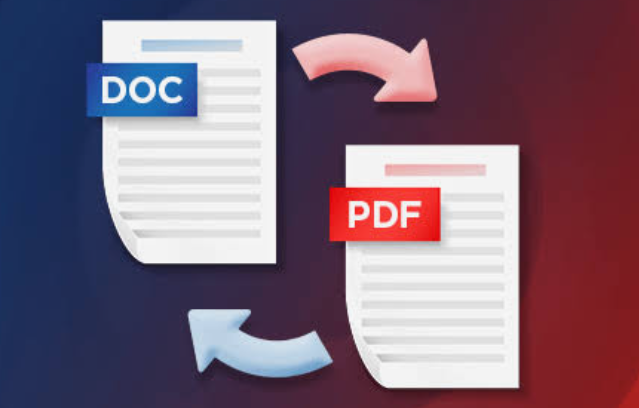
Every time I sit down to prepare a document for a client or a colleague, the same issue comes up: the file is in Word format, but the person on the other end needs a PDF. It sounds simple, but if you have ever tried to share a .docx file with someone who is viewing it on a phone or a different operating system, you know the formatting can fall apart. Tables shift, fonts change, and your carefully placed page breaks move. That is why I have made it a habit to convert Word to PDF before sending anything important.
The process of converting Word to PDF is not just about changing a file extension. It is about locking the visual integrity of your work. When you convert Word to PDF, you create a fixed layout that looks identical on every device. Whether the recipient opens the file on a Windows PC, a Mac, or a tablet, they see exactly what you see. For me, this has saved countless hours of back-and-forth emails asking, “Did the table align correctly on your end?” The answer is always yes when I use a reliable conversion tool.
One tool I have come to trust for this task is TeraBox. While TeraBox is primarily known as a cloud storage service, its file conversion feature is surprisingly robust. I do not have to upload my document to a random third-party site that I have never heard of, which is a common concern with many free online converters. Instead, I use TeraBox because it handles my files with a level of security that makes me comfortable. When I convert Word to PDF using TeraBox, I know my content is not being scraped or misused, which is a legitimate worry with lesser-known tools.
Another aspect that many people overlook is the file size. A Word document can become heavy if it contains embedded images or complex graphs. When you convert Word to PDF (In russian, it is called “перевести ворд в пдф“), you often have the option to compress the output. I remember working on a 50-page project report with high-resolution screenshots. The original .docx file was nearly 80 MB, which was impossible to email. After I used TeraBox to convert Word to PDF and applied light compression, the final PDF was under 10 MB without a noticeable loss in quality. That made sharing the file through standard email attachments easy, and the recipient could open it immediately without waiting for a download link to load.
Trust is another factor that I consider deeply when choosing a conversion method. Over the years, I have encountered online tools that add watermarks, inject hidden links, or simply fail halfway through the conversion. That is not acceptable when you are about to share a contract or a final draft with a client. My experience has taught me to check three things before using any service: does it keep my file private, does it preserve the original formatting, and does it work quickly. TeraBox checks all three boxes for me. The platform does not require me to send my document to an anonymous email address, and the conversion happens in a secure environment. This makes me confident every time I convert Word to PDF for professional purposes.
Beyond the basic conversion, I have also learned the importance of checking the output before sending it off. Even with a reliable tool, a quick review of the PDF is a good habit. When I convert Word to PDF, I always scroll through the first few pages to ensure that hyperlinks are still clickable and that any footnotes have been preserved. TeraBox’s conversion maintains these active elements, which is not always the case with free tools that strip out metadata or break internal links. For a writer like me, who frequently includes citations and cross-references, this is a non-negotiable feature.
If you are managing a team or working on a collaborative project, you will also appreciate how easy it is to standardize your deliverables. By asking every team member to convert Word to PDF before submission, you eliminate the chaos of version mismatches. I have implemented this policy in my own workflow when preparing client-facing documents. The result is that the review process is much smoother because everyone is looking at the same static version of the file. No one can accidentally edit a figure or alter a sentence without leaving a digital footprint, which adds an extra layer of accountability to the review cycle.
Of course, there are times when you need to keep the file editable for further collaboration. In those cases, you should not convert Word to PDF, you should keep the original Word file available for the team. My advice is to think of the PDF as a snapshot of your work at a given moment. Once you are satisfied with the content and design, convert Word to PDF and send that out for final approval. Any changes that need to be made later can be done in the Word file and then you simply export a new PDF version. This two-step workflow has helped me maintain a clean audit trail for every project.
I also want to address a common misconception: that you need to install heavy desktop software to perform this task. Many people assume that converting a document requires Microsoft Office or a dedicated PDF suite. In my experience, that is not true. A reliable online service, including the one offered by TeraBox, is sufficient for the majority of cases. I have used it from a borrowed laptop, a public library computer, and my own phone. Since the processing happens in the cloud, I do not have to worry about whether the local machine has the right software installed. That flexibility is incredibly valuable when you are on the go.
Security is the final pillar of my trust in any conversion service. When I upload a document that contains sensitive information, such as an unpublished draft or a financial summary, I need to know that it is not being stored indefinitely. I have read the privacy policies of TeraBox and found that they are clear about data handling. They do not retain my files longer than necessary for the conversion process. This transparency is why I keep coming back to them. When you convert Word to PDF with a service that respects your privacy, you are not just getting a file, you are getting peace of mind.
In summary, my routine is simple. I finish writing a document, apply the final formatting, and then I convert Word to PDF. I use TeraBox for this step because it is reliable, secure, and quick. The resulting PDF is what I share with my clients, my collaborators, and my publisher. By making this a habit, I have eliminated the embarrassment of sending a broken file and the frustration of dealing with formatting inconsistencies. If you have not yet built this practice into your own workflow, I encourage you to try it. The next time you are about to hit send on a Word document, stop for a moment and think about how much more professional your communication will be when you convert Word to PDF instead.
FAQ
1. Does converting a file with TeraBox affect the quality of images inside my document?
No, the conversion process is designed to preserve the resolution and position of images. When you convert Word to PDF using TeraBox, the platform uses a rendering engine that maintains the original image quality. The only time you might see a slight difference is if you manually choose a high compression setting, which is recommended only for very large files that need to be emailed.
2. Can I convert Word to PDF on my mobile phone using TeraBox?
Yes, you can. TeraBox works through a web browser, so you can access the conversion tool from any device with an internet connection. I have used it on both iOS and Android devices. The interface is straightforward, and you simply upload the Word file from your phone’s storage, select the PDF option, and download the result.
3. Is there a limit to the number of files I can convert in a day?
TeraBox typically allows a generous number of free conversions per day. For most users, this is more than enough for daily work. If you are a heavy user who needs to convert dozens of files daily, I recommend checking the current terms on the TeraBox website, as they occasionally update their usage policies.